


The Spanish retail and e-commerce market is undergoing a major transformation. In 2025, according to ONTSI, online commerce in Spain surpassed €90 billion in annual revenue, with sustained double-digit growth and an increasingly seamless integration between physical and digital channels.
But beyond the numbers, what is truly changing is the way companies compete: technology, automation and artificial intelligence are redefining business models, logistics operations, and the relationship with consumers.
2026 will be the year when Spanish retailers consolidate their shift toward data-driven efficiency. These are the key trends that will define the path forward.
The Maturity of Spanish E-Commerce: From Rapid Growth to Efficient Growth
For years, many companies focused mainly on increasing online sales. Today, the challenge has evolved: the priority is to grow profitably and sustainably.
Spanish brands and retailers are concentrating their strategy on three main priorities:
- improving profitability per order,
- optimising inventory turnover,
- and maintaining a healthy cash flow.
In this context, automation becomes the key ally.
Companies that have digitalised their purchasing processes and demand forecasting are already reducing excess stock by up to 25%, while minimising out-of-stock incidents during seasonal peaks.
Spanish e-commerce has matured: it is no longer only about selling more, but about selling intelligently.
True Omnichannel: The Customer Buys Where They Want, When They Want
The line between physical stores and online channels has almost disappeared. Spanish consumers now expect to buy online, pick up in-store, or return orders via courier, all without friction.
According to Adigital, more than 70% of online buyers use several channels during the purchasing process.
This requires centralised and accurate inventory management, where stock visibility is consistent across every sales touchpoint.
Here, automated forecasting and demand planning play a decisive role: systems must adjust orders and stock levels in real time, synchronising warehouse, marketplace and physical store.
Omnichannel is no longer a strategic choice, it is an operational necessity.
Artificial Intelligence and Predictive Forecasting: The New Competitive Edge
The adoption of artificial intelligence (AI) in Spanish retail is growing exponentially.
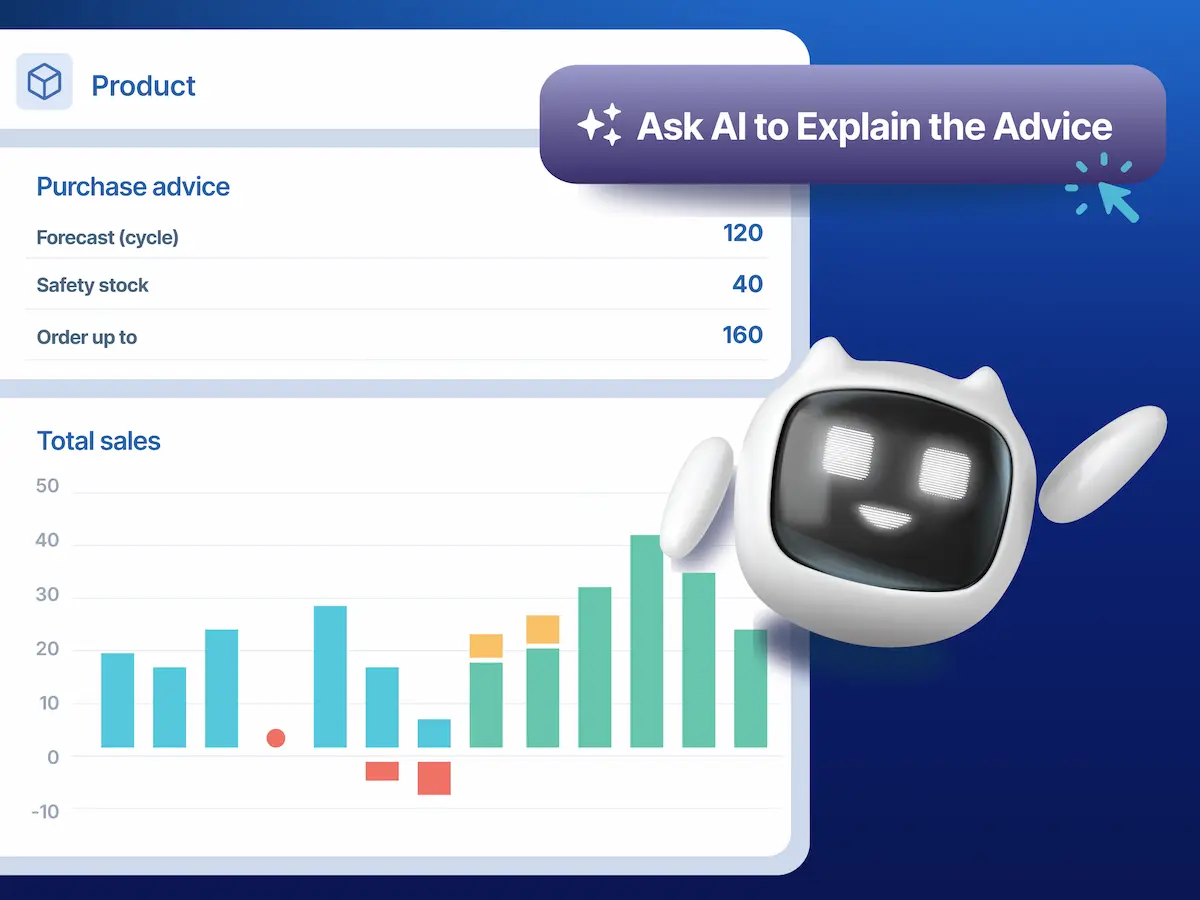
AI is no longer limited to marketing or customer service, it has become the engine behind forecasting and demand planning.
Predictive models powered by AI make it possible to:
- anticipate trends weeks in advance,
- adjust forecasts based on weather, promotions or search behaviour,
- and automate purchasing and replenishment decisions.
Companies using advanced solutions such as Optiply already combine more than 40 forecasting models, automatically selecting the most accurate one for each SKU.
The result: a more agile supply chain, less dependent on intuition, and capable of turning data into real-time action.
By 2026, AI will no longer be a novelty, but an operational standard within Spanish retail.
Sustainability and Efficiency: An Essential Combination
Spanish consumers are increasingly aware of the environmental impact of their purchases.
But retailers also recognise that sustainability and operational efficiency go hand in hand.
Reducing waste, minimising returns, and optimising logistics routes not only lowers emissions, it also improves margins.
Inventory automation and forecasting contribute to both goals:
- less overproduction,
- less capital tied up in stock,
- and inventory levels aligned with real demand.
In 2026, more retailers will embrace “profitable sustainability”, where process optimization is not only a matter of responsibility, but also of profitability.
The Rise of CPFR and Digital Supplier Collaboration
The Collaborative Planning, Forecasting and Replenishment (CPFR) model is gaining traction among Spanish retailers.
Its core principle: aligning demand forecasting, marketing calendars and replenishment into a single shared data platform.
Instead of monthly cycles and manual adjustments, CPFR enables:
- real-time forecast updates,
- faster reaction to demand changes,
- and stronger supplier relationships.
Some of Spain’s most innovative companies are already connecting their ERP or WMS systems with inventory optimization solutions to build a collaborative, transparent and resilient supply chain.
Nearshoring and Resilience: New Sourcing Strategies
Global instability and rising freight costs have accelerated a clear trend: relocating production and logistics hubs closer to Europe.
Spain, due to its strategic position, is consolidating its role as a logistics hub for Southern Europe.
Nearshoring brings clear advantages:
- lower risk of disruption,
- shorter lead times,
- and more flexible planning.
However, it requires greater digital synchronisation between purchasing, warehouses and local suppliers, where automated forecasting and real-time stock management are essential.
From Operational Buyer to Digital Strategist
The role of the purchasing manager is also evolving. It is no longer about simply “restocking”, but about anticipating, analysing and optimising.
Automation and AI are freeing teams from repetitive tasks (such as manual adjustments or Excel calculations) so they can focus on strategic decisions:
- supplier selection,
- negotiation of lead times,
- and catalogue planning based on profitability and future demand.
The new purchasing leader is data-driven, analytical, and collaborative.
Automation and Optiply: The Next Step for Spanish Retail
All these trends point to one common denominator: data and automation are the key to controlled growth.
Traditional demand planning tools are no longer enough; the future lies in intelligent systems that combine forecasting, execution, and continuous learning.
Optiply was designed for this.
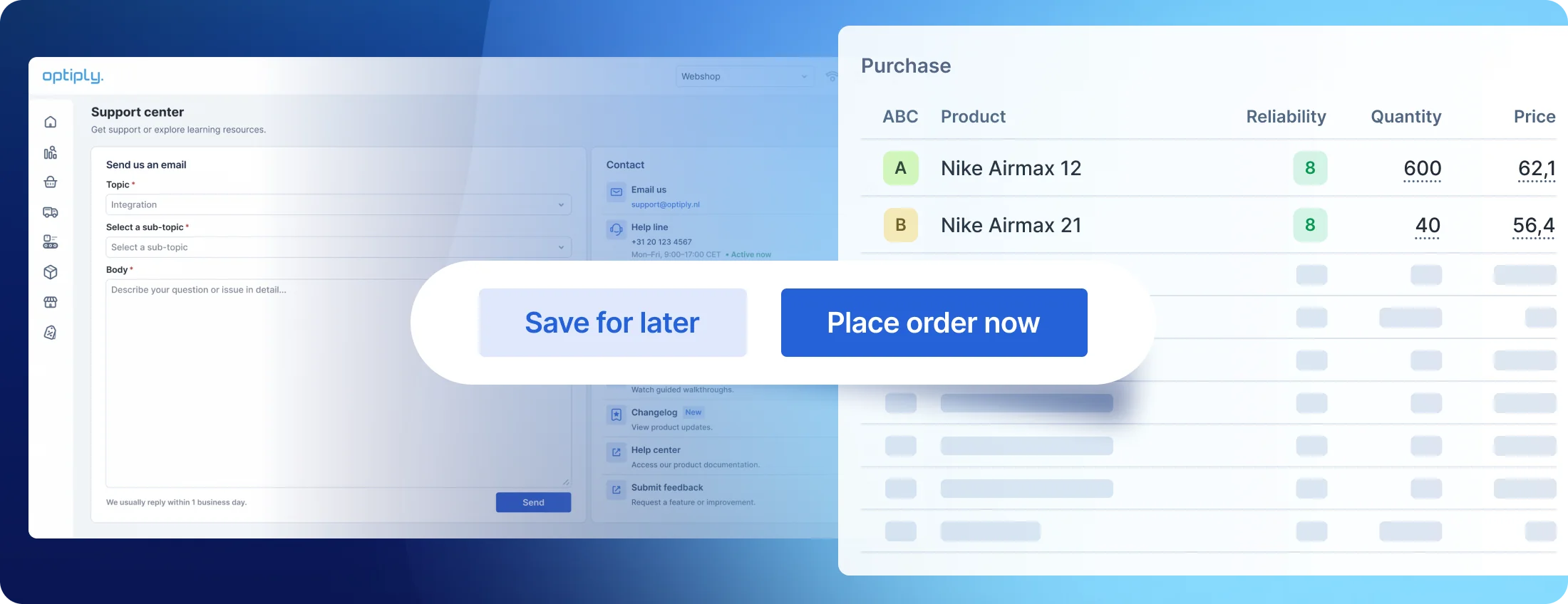
By combining AI, real-time data and full automation of purchasing decisions, it enables retailers to:
- keep inventory balanced,
- reduce stockouts,
- free up cash flow,
- and turn demand planning into a sustainable competitive advantage.
With Optiply, Spanish retailers and e-commerce businesses can approach 2026 on solid ground: less uncertainty, more profitability and greater agility.
Conclusion
2026 will mark the beginning of a new era for Spanish retail, one in which growth depends less on sales volume, and more on efficiency, precision and the ability to anticipate.
Retailers that embrace technology, AI and automation will not just survive the change, they will lead the new era of intelligent commerce.
Discover how Optiply can help you prepare your business for this future.
Book a free demo and take the next step toward automated planning.
Answers to frequently asked questions



.webp)